
Choosing climbing holds for a new wall — or refreshing an existing one — starts with understanding what each hold type does on the wall and how different types work together in a route. This guide walks you through every hold type VirginGrip manufactures, explains where and how each one is used, and helps you pick the right combination for your wall, whether you are outfitting a commercial climbing gym or building a bouldering wall at home.
What determines the right mix?
Three factors shape your selection: wall angle (vertical, slightly overhanging, steep, roof), target difficulty (beginner-friendly, intermediate, competition-level) and climbing style (technical face climbing, dynamic bouldering, endurance lead routes). A vertical kids’ wall needs mostly jugs and positive crimps. A 45-degree competition boulder demands slopers, pinches and volumes. A lead wall benefits from a balanced mix of everything, with footholds as the backbone.
The sections below cover each hold type from the most positive (jugs) to the most technical (crack holds), so you can build your selection step by step.
Jugs
Jugs are large, deeply incut holds that allow a full-hand grip. They are the most positive hold type — comfortable to grab and easy to read on the wall.
Where they belong: warm-up routes, downclimb positions, rest points on steep walls, beginner problems, kids’ walls. On overhanging terrain, jugs become essential recovery points between harder sequences.
How to use them in route setting: Place jugs at the start and end of a problem for controlled entry and exit. On lead walls, use them every 3–5 metres as shake-out positions. On steep boulders, a well-placed jug turns an impossible sequence into a readable one.
VirginGrip jugs range from the powerful UFO Large Jugs Jugs for steep walls to the ergonomic Lagunas Jugs and Frogs Jugs for vertical routes.
-
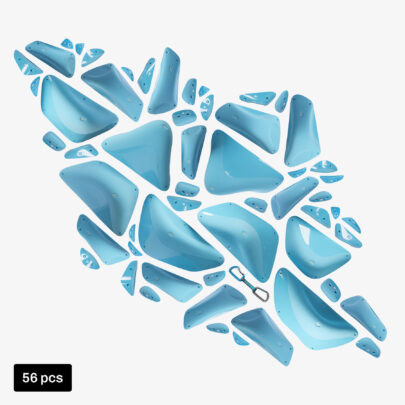 Fighters1.995 €
 -
Falcons Jugs417 €
-
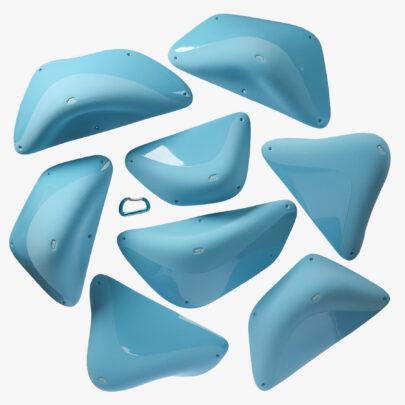 Fighters PU Macros1.079 €
 -
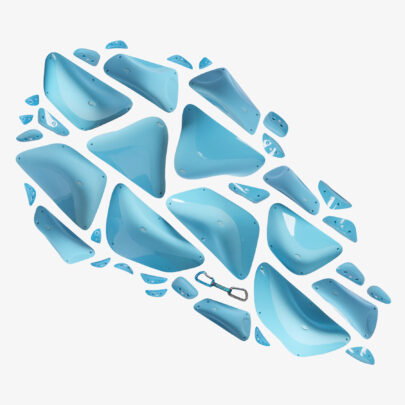 Fighters complete set1.559 €
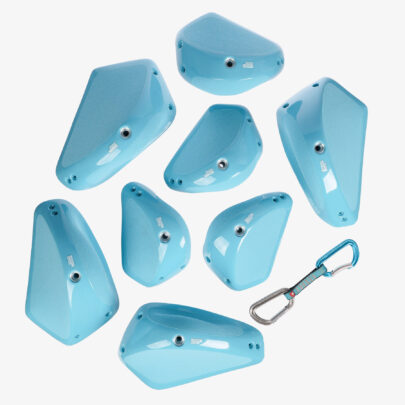
Crimps
Crimps are small, flat-edged holds with a shallow positive lip. They demand precise finger placement and reward controlled, static movement.
Where they belong: technical face climbing, training walls focused on finger strength, intermediate-to-advanced boulder problems. Mini crimps are a staple of competition-style setting.
How to use them in route setting: Crimps set the difficulty ceiling. A sequence of crimps on a vertical wall creates a strength-endurance crux; on a slab, they test balance and precision. Mix crimp sizes to create progressive difficulty within a single route.
VirginGrip crimps include the Falcons Crimps with enhanced grip area for long-lasting texture, the Fighters Mini Crimps for competition problems and the Lagunas Crimps for versatile commercial setting.
-
Fighters1.995 €
-
Falcons Crimps119 €
-
 Fighters MINI Crimps75 €
 -
Fighters Crimps119 €
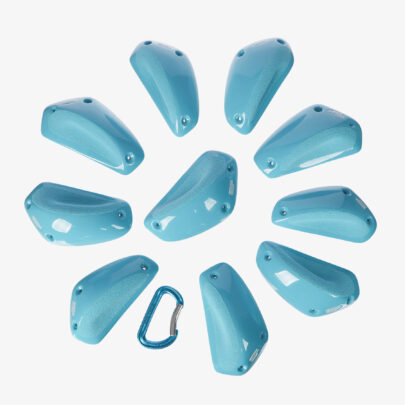
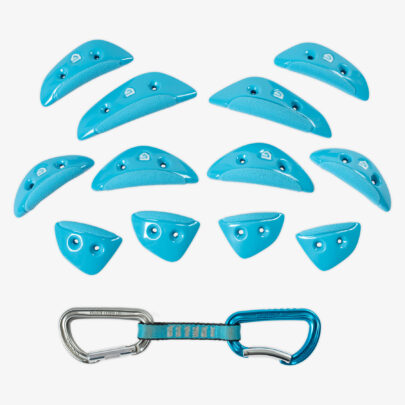
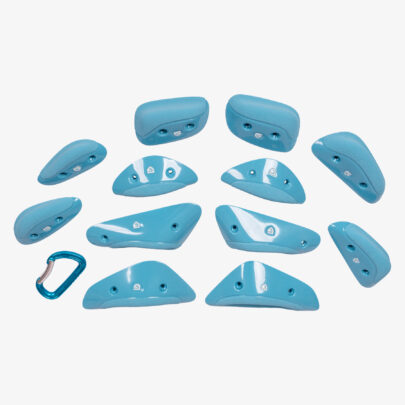
Slopers
Slopers are rounded holds without positive edges. They cannot be gripped — only pressed, requiring open-hand contact, body tension and precise foot placement.
Where they belong: modern competition bouldering, body-tension training, overhanging walls where technique matters more than finger strength. Slopers are the defining hold type of contemporary competition setting.
How to use them in route setting: Slopers force climbers to engage their core and trust their feet. Pair them with good footholds for technical sequences, or combine them with jugs to create read-the-beta cruxes where body position is the key.
VirginGrip slopers include the Falcons Slopers with upgraded abrasion resistance, the large Base Lines Maxi Slopers for bold lead-wall movement and the dual-texture Seashells Slopies that combine smooth and positive surfaces.
-
Falcons Slopers479 €
-
Fighters PU Macros1.079 €
-
Fighters complete set1.559 €
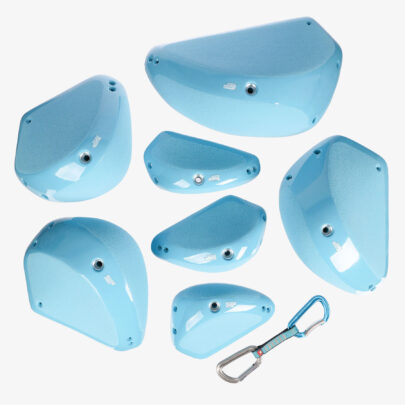
Pinches
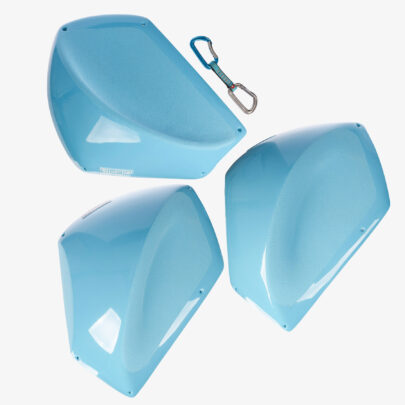
Pinches are squeezed between the thumb and fingers. They train thumb opposition, forearm endurance and full-body engagement — the wider the pinch, the harder the grip.
Where they belong: steep boulders, dynamic sequences that demand lateral control, routes focused on body positioning. Pinches add a dimension that crimps and jugs do not: horizontal force.
How to use them in route setting: Pinches work best at angles between 20° and 45° overhang, where gravity amplifies the squeeze demand. Alternate pinch orientation (horizontal, vertical, diagonal) to create varied movement.
VirginGrip pinches range from the technical Fighters Pinches to the extra-large Lagunas Pinches XL and the Falcons Pinches PU Macros for bold, eye-catching problems.
-
Falcons1.112 €
-
Fighters1.995 €
-
Falcons Pinches469 €
Footholds
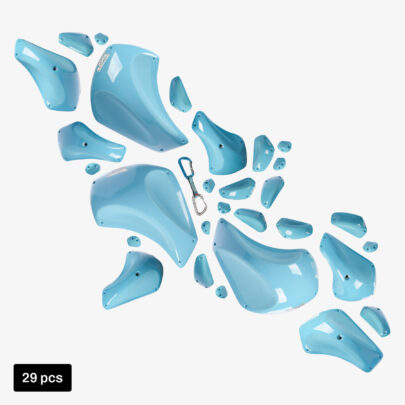
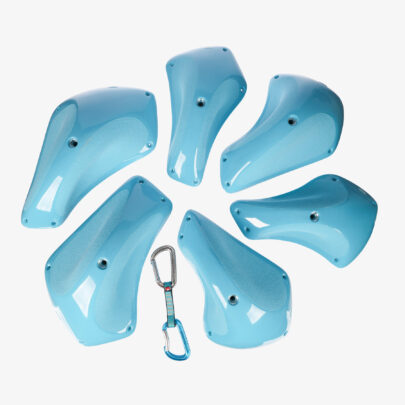
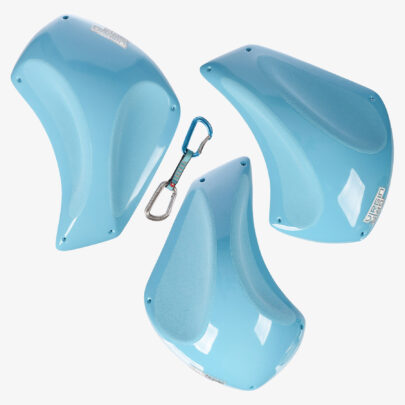
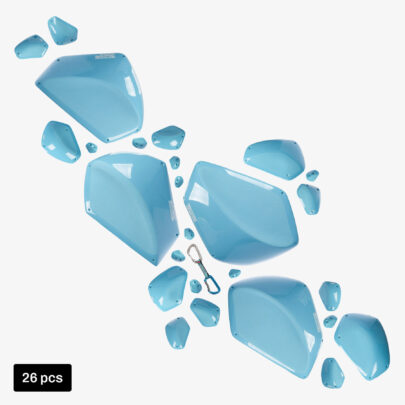
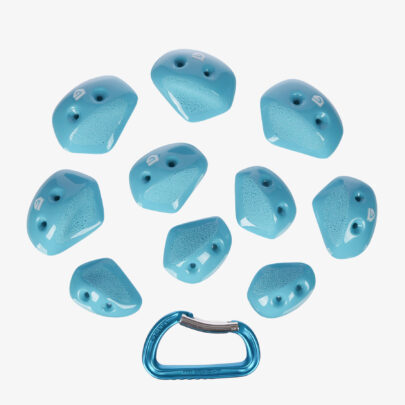
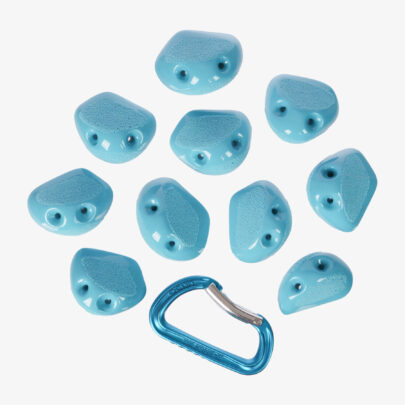
Footholds are small, precisely shaped holds designed exclusively for feet. They are the most underrated category in route setting — yet they determine how a route reads and flows more than any other hold type.
Where they belong: everywhere. Every route needs footholds. On vertical walls they define movement precision; on overhangs they provide the pivot points for body tension; on slabs they are the entire challenge.
How to use them in route setting: Place footholds with intention — each one should serve a specific move. Screw-on footholds sit flush and do not spin, making them ideal for precision. Bolt-on footholds allow repositioning. Mix both for maximum setting flexibility.
VirginGrip footholds include the Falcons Footholds with enhanced abrasion resistance for high-traffic gyms, Frogs Footholds for playful geometry and Lagunas Footholds for versatile use across all wall angles.
-
Falcons Slab989 €
-
Falcons1.112 €
-
Falcons Footholds50 €
Edges
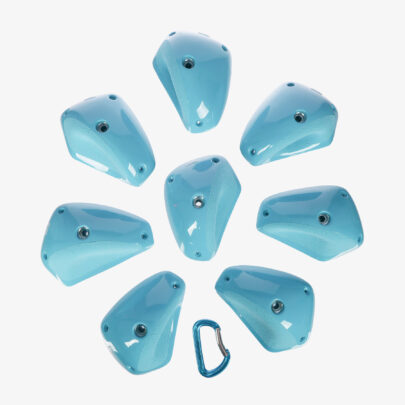
Edges are flat, rail-like holds that bridge the gap between crimps and slopers. They require open-hand strength, steady contact and good body positioning.
Where they belong: vertical and slightly overhanging walls, training for open-hand grip strength, routes that reward controlled, deliberate movement.
How to use them in route setting: Edges reward climbers who maintain body tension throughout a sequence. Use them as consistent intermediate holds in lead routes — they provide enough purchase to rest on but not enough to recover fully.
VirginGrip edges: the Falcons Edges feature the upgraded grip area with enhanced abrasion resistance — designed for commercial gyms where texture longevity matters.
-
Falcons Edges189 €
Plates
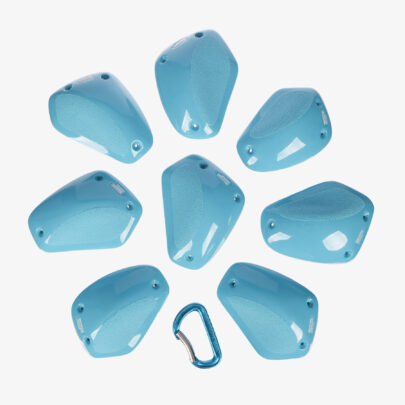
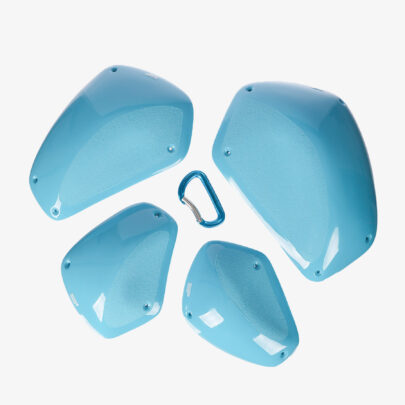
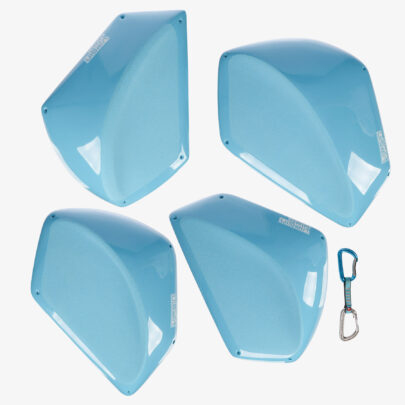
Plates are large, flat holds that function as body-size wall features. They create mantling, compression and creative body-positioning challenges.
Where they belong: competition-style boulders, feature walls, problems that demand whole-body movement rather than finger strength.
How to use them in route setting: A single plate can define the character of an entire boulder problem. Use plates to create mantles, press sequences and volume-style movement on flat walls.
VirginGrip plates are available in the Falcons series — from Small Plates to Large Plates and the oversized Plates PU Macros.
-
Falcons Slab989 €
-
Falcons Small Plates116 €
-
Falcons Large Plates149 €
-
Falcons Plates PU Macros689 €
Pockets
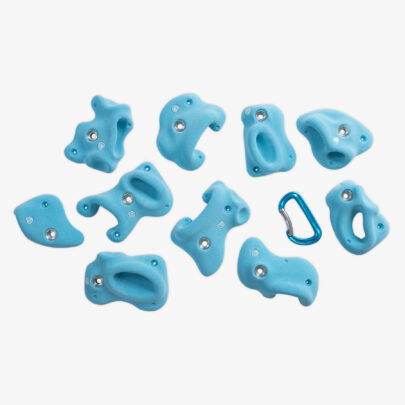
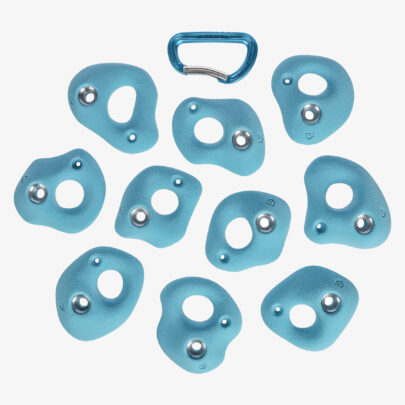
Pockets isolate individual fingers and develop specific finger strength. They add variety and challenge climbers to read sequences carefully.
Where they belong: training walls (sparingly), lead routes for sustained endurance climbing, limestone-style problems. Use with caution — high finger load means higher injury risk.
How to use them in route setting: Mix mono, two-finger and three-finger pockets to control difficulty precisely. Always provide an alternative foot-intensive line for climbers who avoid pockets.
VirginGrip pockets: the Lagunas Pockets offer a versatile set of mono, two-finger and three-finger pockets in durable PU.
-
Phalanx Distalis105 €
-
Lagunas Pockets67 €
-
Manta Ray – set 1102 €
-
Manta Ray – set 2180 €
Crack holds
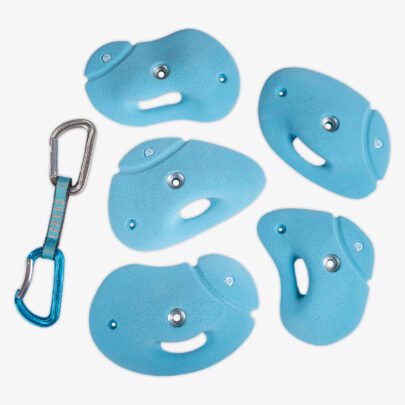
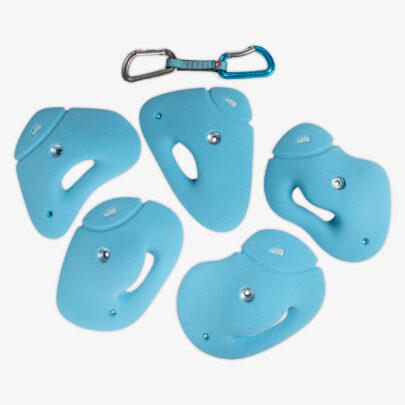
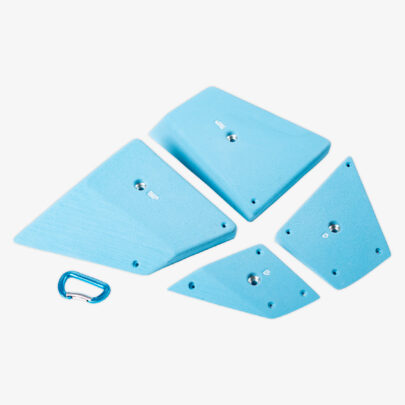
Crack holds simulate natural rock crack features indoors — bringing jamming, laybacking and bridging technique into the gym.
Where they belong: gyms that want to offer crack climbing training, route setters building outdoor-style problems, walls focused on technique diversity.
How to use them in route setting: Combine crack modules into longer sequences. Mix crack holds with face holds to create hybrid problems that transition between styles.
VirginGrip crack holds: the modular Crack Formation and Crack Crab systems for both bouldering and lead routes.
-
Pyramids of Giza large264 €
Building a balanced set
| Wall type | Recommended mix |
|---|---|
| Kids’ wall / beginners | 50 % jugs, 20 % positive crimps, 20 % footholds, 10 % slopers |
| Home bouldering wall (15–25 m²) | 20 % jugs, 25 % crimps, 20 % slopers, 15 % pinches, 20 % footholds |
| Commercial gym — bouldering | 15 % jugs, 20 % crimps, 20 % slopers, 15 % pinches, 15 % footholds, 10 % plates, 5 % pockets |
| Commercial gym — lead wall | 20 % jugs, 25 % crimps, 15 % slopers, 10 % pinches, 25 % footholds, 5 % edges |
| Competition setting | Based on style — typically heavy on slopers, pinches, plates and macros |
Density guideline: 10–12 holds per m² for bouldering, 8–10 per m² for lead walls, 6–8 per m² for kids’ and beginner walls.
Not sure where to start? VirginGrip Boulder Kits and Lead Sets bundle holds from a single series into a balanced selection, ready to mount.
All VirginGrip climbing holds are manufactured in-house in Tisá, Czech Republic, from eco-friendly polyurethane with up to 40 % renewable raw materials. Learn more about our production →